Showing posts with label facebook cover. Show all posts
Showing posts with label facebook cover. Show all posts
Friday, 21 June 2013


Thursday, 20 June 2013

Wednesday, 19 June 2013
Lesson 8g (8.4 Repeat each sentence)
8.4c
Complete the following sentences with “more every day.”
I suffer (I suffer more every day.) / He suffers (He suffers more every day.) / You suffer (You suffer more every day.) / We suffer (We suffer more every day.) / They suffer (They suffer more every day.)
Complete the following sentences with “to think of their ignorance.”
I suffered (I suffered to think of their ignorance.) / She suffered (She suffered to think of their ignorance.) / You suffered (You suffered to think of their ignorance.) / We suffered (We suffered to think of their ignorance.) / They suffered (They suffered to think of their ignorance.)
Complete the following sentences with “even to do them a favor.”
I will suffer (I will suffer even to do them a favor.) / He will suffer (He will suffer even to do them a favor.) / You will suffer (You will suffer even to do them a favor.) / We will suffer (We will suffer even to do them a favor.) / They will suffer (They will suffer even to do them a favor.)
8.5 Repeat each word (irregular verbs).
8.5a
TO THINK (to think) / She promised to think. (She promised to think.)
Think. (Think.) / Please think. (Please think.)
thinking (thinking) / He is thinking. (He is thinking.)
thought (thought) / it is thought (it is thought) / it was thought (it was thought) / it will be thought (it will be thought)
I think (I think) / he thinks (he thinks) / she thinks (she thinks) / it thinks (it thinks) / you think (you think) / we think (we think) / they think (they think)
I thought (I thought) / he thought (he thought) / she thought (she thought) / it thought (it thought) / you thought (you thought) / we thought (we thought) / they thought (they thought)
I will think (I will think) / he will think (he will think) / she will think (she will think) / it will think (it will think) / you will think (you will think) / we will think (we will think) / they will think (they will think)
Complete the following sentences with “more every day.”
I suffer (I suffer more every day.) / He suffers (He suffers more every day.) / You suffer (You suffer more every day.) / We suffer (We suffer more every day.) / They suffer (They suffer more every day.)
Complete the following sentences with “to think of their ignorance.”
I suffered (I suffered to think of their ignorance.) / She suffered (She suffered to think of their ignorance.) / You suffered (You suffered to think of their ignorance.) / We suffered (We suffered to think of their ignorance.) / They suffered (They suffered to think of their ignorance.)
Complete the following sentences with “even to do them a favor.”
I will suffer (I will suffer even to do them a favor.) / He will suffer (He will suffer even to do them a favor.) / You will suffer (You will suffer even to do them a favor.) / We will suffer (We will suffer even to do them a favor.) / They will suffer (They will suffer even to do them a favor.)
8.5 Repeat each word (irregular verbs).
8.5a
TO THINK (to think) / She promised to think. (She promised to think.)
Think. (Think.) / Please think. (Please think.)
thinking (thinking) / He is thinking. (He is thinking.)
thought (thought) / it is thought (it is thought) / it was thought (it was thought) / it will be thought (it will be thought)
I think (I think) / he thinks (he thinks) / she thinks (she thinks) / it thinks (it thinks) / you think (you think) / we think (we think) / they think (they think)
I thought (I thought) / he thought (he thought) / she thought (she thought) / it thought (it thought) / you thought (you thought) / we thought (we thought) / they thought (they thought)
I will think (I will think) / he will think (he will think) / she will think (she will think) / it will think (it will think) / you will think (you will think) / we will think (we will think) / they will think (they will think)
Lesson 8f (8.4 Repeat each sentence.)
 8.4a
8.4aComplete the following sentences with “beside it each afternoon.” I will say, “I remain.” You will answer, “I remain beside it each afternoon.”
I remain. (I remain beside it each afternoon.) / He remains (He remains beside it each afternoon.) / You remain (You remain beside it each afternoon.) / We remain (We remain beside it each afternoon.) / They remain (They remain beside it each afternoon.)
Complete the following sentences with “as if there was no noise.”
I remained (I remained as if there was no noise.) / She remained (She remained as if there was no noise.) / You remained (You remained as if there was no noise.) / We remained (We remained as if there was no noise.) / They remained (They remained as if there was no noise.)
Complete the following sentences with “when the leader comes.”
I will remain (I will remain when the leader comes.) / He will remain (He will remain when the leader comes.) / You will remain (You will remain when the leader comes.) / We will remain (We will remain when the leader comes.) / They will remain (They will remain when the leader comes.)
8.4b
Complete the following sentences with “more every day.”
I separate (I separate more every day.) / He separates (He separates more every day.) / You separate (You separate more every day.) / We separate (We separate more every day.) / They separate (They separate more every day.)
Complete the following sentences with “the crowd by means of this.”
I separated (I separated the crowd by means of this.) / She separated (She separated the crowd by means of this.) / You separated (You separated the crowd by means of this.) / We separated (We separated the crowd by means of this.) / They separated (They separated the crowd by means of this.)
Complete the following sentences with “all my books.”
I will separate (I will separate all my books.) / He will separate (He will separate all my books.) / You will separate (You will separate all my books.) / We will separate (We will separate all my books.) / They will separate (They will separate all my books.)
Tuesday, 18 June 2013

Saturday, 15 June 2013
आंकड़ों का खेल: आखिर कौन बनेगा विजेता, भारत या पाकिस्तान?

बर्मिघम। चैंपियंस ट्रॉफी में भारत और पाकिस्तान के बीच होने वाले मुकाबले को लेकर क्रिकेट दिग्गजों से लेकर प्रशंसकों में काफी उत्साह है। लोग बेसब्री से इस मुकाबले का इंतजार कर रहे हैं। उससे पहले ही कोई पाकिस्तान के जीतने पर दांव लगा रहा है तो भारत को पक्का विजेता मान रहा है। लेकिन दोनों देशों के बीच हुए अबतक के मुकाबलों के आंकड़े क्या कहते हैं, आइए, जानते हैं इनके बारे में :
भारत-पाक आमने-सामने
मैच खेले : 124
भारत जीता : 49
पाक जीता : 71
परिणाम नहीं : 04
टाई : 00
उच्चतम स्कोर
भारत : 356/9 (50 ओवर), विशाखापत्तनम, 2005
पाकिस्तान : 344/8 (50 ओवर), कराची, 2004
न्यूनतम स्कोर
भारत : 79 (34.2 ओवर), सियालकोट, 1978
पाकिस्तान : 87 (32.5 ओवर), शारजाह, 1985
उच्चतम व्यक्तिगत स्कोर
भारत : 183, विराट कोहली, ढाका, 2012
पाकिस्तान : 194, सईद अनवर, चेन्नई, 1997
सर्वश्रेष्ठ गेंदबाजी
भारत : 5/16, सौरव गांगुली, टोरंटो, 1997
पाकिस्तान : 7/37, आकिब जावेद, शारजाह, 1991
चैंपियंस ट्रॉफी में आमने-सामने
मैच : 02
भारत जीता : 00
पाक जीता : 02
Sabhar (Courtesy - Dainik Jagran etc.)
Friday, 14 June 2013
Lesson 7 Table 1
USING APOSTROPHES |
| John‘s book | The book belongs to John. |
| the brothers’ book | The book belongs to two or more brothers. |
| the man‘s car | The car belongs to one man. |
| the men‘s car | One car belongs to two or more men. |
| the witness‘s (or witness’) book | The book belongs to one witness. |
| the witness‘s (or witness’) books | One witness owns more than one book. |
| the witnesses’ book | The book belongs to two or more witnesses. |
| the witnesses’ books | Two or more witnesses each own more than one book. |
| the witnesses are looking at a book | Two or more witnesses are looking at books they each own. |
| the witnesses are looking at their books | Two or more witnesses are looking at one or more books they each own. Two or more witnesses are looking at two or more books they all own together. |
| someone‘s car | The car belongs to someone. |
| something‘s help | The help belongs to something. |
| something‘s open | Something is open. |
Some examples of two words becoming one.
| I + am = Iam = I’m | I’m fine. |
| it + is = itis = it’s | It’s fine. |
| he + is = heis = he’s | He’s fine. |
| she + is = sheis = she’s | She’s fine. |
| we + are = weare = we’re | We’re fine. |
| you + are = youare = you’re | You’re fine. |
| they + are = theyare = they’re | They’re fine. |
| that + is = thatis = that’s | That’s okay. |
| I + will = Iwill = I’ll | I’ll pay the money. |
| he + will = hewill = he’ll | He’ll pay the money. |
| she + will = shewill = she’ll | She’ll pay the money. |
| it + will = itwill = it’ll | It’ll pay the money. |
| we + will = wewill = we’ll | We’ll pay the money. |
| you + will = youwill = you’ll | You’ll pay the money. |
| they + will = theywill = they’ll | They’ll pay the money. |
| that + will = thatwill = that’ll | That’ll be fine. |
| this + will = thiswill = this’ll | This’ll be fine. |
| I + have = Ihave = I’ve | I’ve taken the money. |
| he + has = hehas = he’s | He’s taken the money. |
| she + has = shehas = she’s | She’s taken the money. |
| we + have = wehave = we’ve | We’ve taken the money. |
| you + have = youhave = you’ve | You’ve taken the money. |
| they + have = theyhave = they’ve | They’ve taken the money. |
| I + had = Ihad = I’d | I’d like to go. |
| he + had = hehad = he’d | He’d like to go. |
| she + had = shehad = she’d | She’d like to go. |
| we + had = wehad = we’d | We’d like to go. |
| you + had = youhad = you’d | You’d like to go. |
| they + had = theyhad = they’d | They’d like to go. |
| will + not = willnot = won’t | It won’t work. |
| do + not = donot = don’t | They don’t work. |
| does + not = doesnot = doesn’t | It doesn’t work. |
| did + not = didnot = didn’t | She didn’t go. |
| should + not = shouldnot = shouldn’t | She shouldn’t go. |
| could + not = couldnot = couldn’t | They couldn’t go. |
| would + not = wouldnot = wouldn’t | We wouldn’t go. |
| can + not = cannot | You cannot go. |
| cannot = can’t | We can’t go. |
| are + not = arenot = aren’t | You aren’t starting. |
| had + not = hadnot = hadn’t | They hadn’t started. |
| have + not = havenot = haven’t | They haven’t started. |
Ain’t is never correct.
| am + not = ain’t | I ain’t listening. |
| is + not = ain’t | He ain’t listening. |
| are + not = ain’t | They ain’t listening. |

Thursday, 13 June 2013
Lesson 7g
 7.6 Repeat each letter of the alphabet.
A / a
B / b
C / c
D / d
E / e
F / f
G / g
H / h
I / i
J / j
K / k
L / l
M / m
N / n
O / o
P / p
Q / q
R / r
S / s
T / t
U / u
V / v
W / w
X / x
Y / y
Z / z
7.7 Before each sentence say, “They were surprised and amazed at what had happened.”
I will say, “He was walking and jumping.” You will say, “They were surprised and amazed at what had happened. He was walking and jumping.”
7.7a He was walking and jumping.
(They were surprised and amazed at what had happened. He was walking and jumping.) They were surprised and amazed at what had happened. He was walking and jumping. (They were surprised and amazed at what had happened. He was walking and jumping.)
7.7b He jumped up and stood on his feet.
(They were surprised and amazed at what had happened. He jumped up and stood on his feet.) They were surprised and amazed at what had happened. He jumped up and stood on his feet. (They were surprised and amazed at what had happened. He jumped up and stood on his feet.)
7.7c She began to walk immediately.
(They were surprised and amazed at what had happened. She began to walk immediately.) They were surprised and amazed at what had happened. She began to walk immediately. (They were surprised and amazed at what had happened. She began to walk immediately.)
7.7d They saw the same man standing and walking.
(They were surprised and amazed at what had happened. They saw the same man standing and walking.) They were surprised and amazed at what had happened. They saw the same man standing and walking. (They were surprised and amazed at what had happened. They saw the same man standing and walking.)
7.7e It was time for them to walk.
(They were surprised and amazed at what had happened. It was time for them to walk.) They were surprised and amazed at what had happened. It was time for them to walk. (They were surprised and amazed at what had happened. It was time for them to walk.)
7.7f He took the man’s right hand and raised him up.
(They were surprised and amazed at what had happened. He took the man’s right hand and raised him up.) They were surprised and amazed at what had happened. He took the man’s right hand and raised him up. (They were surprised and amazed at what had happened. He took the man’s right hand and raised him up.)
www.acme-aipc.in
Lesson 7f

7.5c
Complete the following sentences with “the books outside every day.”
I already carry (I already carry the books outside every day.) / She already carries (She already carries the books outside every day.) / You already carry (You already carry the books outside every day.) / We already carry (We already carry the books outside every day.) / They already carry (They already carry the books outside every day.)
Complete the following sentences with “the whole thing.”
I carried (I carried the whole thing.) / She carried (She carried the whole thing.) / You carried (You carried the whole thing.) / We carried (We carried the whole thing.) / They carried (They carried the whole thing.)
Complete the following sentences with “it to the gate on foot.”
I will carry (I will carry it to the gate on foot.) / He will carry (He will carry it to the gate on foot.) / You will carry (You will carry it to the gate on foot.) / We will carry (We will carry it to the gate on foot.) / They will carry (They will carry it to the gate on foot.)
7.5d
Complete the following sentences with “in front when he gets up.”
I look (I look in front when he gets up.) / She looks (She looks in front when he gets up.) / You look (You look in front when he gets up.) / We look (We look in front when he gets up.) / They look (They look in front when he gets up.)Complete the following sentences with “across the water at once.”
I looked (I looked across the water at once.) / She looked (She looked across the water at once.) / You looked (You looked across the water at once.) / We looked (We looked across the water at once.) / They looked (They looked across the water at once.)
Complete the following sentences with “inside and behind the house.”
I will look (I will look inside and behind the house.) / He will look (He will look inside and behind the house.) / You will look (You will look inside and behind the house.) / We will look (We will look inside and behind the house.) / They will look (They will look inside and behind the house.)
7.5e
Complete the following sentences with “anything under this book.”
I don’t put (I don’t put anything under this book.) / He doesn’t put (He doesn’t put anything under this book.) / You don’t put (You don’t put anything under this book.) / We don’t put (We don’t put anything under this book.) / They don’t put (They don’t put anything under this book.)Complete the following sentences with “them between the men.”
I didn’t put (I didn’t put them between the men.) / She didn’t put (She didn’t put them between the men.) / You didn’t put (You didn’t put them between the men.) / We didn’t put (We didn’t put them between the men.) / They didn’t put (They didn’t put them between the men.)
Complete the following sentences with “anything near the fire.”
I won’t put (I won’t put anything near the fire.) / He won’t put (He won’t put anything near the fire.) / You won’t put (You won’t put anything near the fire.) / We won’t put (We won’t put anything near the fire.) / They won’t put (They won’t put anything near the fire
www.acme-aipc.in
Wednesday, 12 June 2013
There is something wrong with + (noun)

Here are some examples:
"There is something wrong with my laptop."
"There is something wrong with my car."
"There is something wrong with my cell phone."
"There is something wrong with my head."
"There is something wrong with your answering machine."
"There is something wrong with your way of thinking."
"There is something wrong with your attitude."
"There is something wrong with your dog."
"There is something wrong with our relationship."
"There is something wrong with our alarm clock."
www.acme-aipc.in
Monday, 10 June 2013
सेमीफाइनल में जगह बनाने को वेस्टइंडीज से भिड़ेगा भारत

लंदन : सेमीफाइनल में जगह बनाने की कवायद में जुटी आत्मविश्वास से ओतप्रोत भारतीय टीम आईसीसी चैम्पियंस ट्राफी ग्रुप बी के मुकाबले में मंगलवार को वेस्टइंडीज से भिड़ेगी। दोनों टीमें पहला मैच जीत चुकी है और दोनों को पता है कि कल जीतने से टूर्नामेंट के अंतिम चार में जगह लगभग पक्की हो जाएगी।
विश्व चैम्पियन भारत ने कार्डिफ में पहले मैच में दक्षिण अफ्रीका को 26 रन से हराया जबकि वेस्टइंडीज ने कम स्कोर वाले मैच में पाकिस्तान को दो विकेट से शिकस्त दी। कल का मुकाबला ऐसे खिलाड़ियों के बीच है, जिन्हें एक-दूसरे के बारे में अच्छी जानकारी है। हाल में इंडियन प्रीमियर लीग खेल चुके वेस्टइंडीज और भारत के खिलाड़ी एक दूसरे की ताकतों और कमजोरियों से बखूबी वाकिफ हैं।
भारतीय कप्तान महेंद्र सिंह धोनी और कैरेबियाई कप्तान ड्वेन ब्रावो चेन्नई सुपर किंग्स में साथ खेलते हैं जबकि विराट कोहली और क्रिस गेल रायल चैलेंजर्स बेंगलूर के खिलाड़ी हैं। शानदार फार्म में चल रहे वेस्टइंडीज के बल्लेबाज मलरेन सैमुअल्स ने पहले ही यह कहकर खतरे की घंटी बजा दी है कि कैरेबियाई खिलाड़ियों के पास इंग्लैंड के हालात में भारतीय आक्रमण को नेस्तनाबूद करने की ताकत है।
कागजों पर भारतीय टीम का पलड़ा भारी लग रहा है। उसके बल्लेबाज शानदार फार्म में है, जिन्होंने लगातार तीन मैचों में 300 से अधिक रन बनाए हैं। पहले मैच में बल्लेबाजी क्रम में बदलाव करते हुए मुरली विजय को बाहर किया गया जिनकी जगह रोहित शर्मा ने ली। दक्षिण अफ्रीका के खिलाफ रोहित और शिखर धवन ने उम्दा पारियां खेली। दोनों ने 127 रन की प्रारंभिक साझेदारी की। भारत इस विजयी संयोजन को छेड़ना नहीं चाहेगा, जिसमें दिनेश कार्तिक को चौथे और धोनी को सुरेश रैना की जगह पांचवें नंबर पर बल्लेबाजी करते देखा गया।
दूसरी ओर अपार प्रतिभाशाली होते हुए भी वेस्टइंडीज टीम लगातार अच्छा प्रदर्शन नहीं कर सकी है। वेस्टइंडीज ने पाकिस्तान के खिलाफ पहले मैच में टेस्ट कप्तान और हरफनमौला डेरेन सैमी को अंतिम एकादश से बाहर रखा। इससे टीम की गहराई और आत्मविश्वास का पता चलता है। लेकिन फिर पाकिस्तान के खिलाफ 170 रन के मामूली लक्ष्य का पीछा करते हुए टीम दो विकेट से बमुश्किल जीत दर्ज कर सकी। गेल, जानसन चार्ल्स, डेरेन ब्रावो और सैमुअल्स की मौजूदगी वाला वेस्टइंडीज का शीषर्क्रम अगर चल निकला तो भारत के लिए मुश्किल खड़ी हो जाएगी। इनके सामने नई गेंद संभालना उमेश यादव, भुवनेश्वर कुमार और ईशांत शर्मा के लिए बड़ी चुनौती होगी। पहले 15 ओवर अभी तक हर मैच में निर्णायक साबित हुए है। चैम्पियंस ट्राफी में भारत के खिलाफ वेस्टइंडीज का रिकार्ड 2-1 का है। उसने पहले 1998 में ढाका में और 2006 में अहमदाबाद में भारत को हराया। भारत ने एकमात्र जीत 2009 में जोहानिसबर्ग में दर्ज की थी।
वेस्टइंडीज के पास तेज गेंदबाजी की कमान संभालने के लिए केमार रोच, रवि रामपाल और टिनो बेस्ट है जबकि स्पिनर सुनील नारायण को खेलना भी आसान नहीं। वेस्टइंडीज के कप्तान ब्रावो ने भारत को चेतावनी देते हुए कहा कि यह ऐसी टीम के खिलाफ कठिन मुकाबला होगा जिसकी ताकत उसकी बल्लेबाजी है। लेकिन हमारे पास उनकी बल्लेबाजी पर नकेल कसने वाले गेंदबाज हैं।
Thursday, 6 June 2013
It's too bad that

'Too bad' means regrettable or unfortunate. When using it in a sentence you are expressing a concern or regret for what has taken place. The topic being discussed could have happened to you, the person you are talking to, or someone or something else.
Here are some examples:
"It's too bad that she lost her job."
"It's too bad that you have to go."
"It's too bad that I found out about it."
"It's too bad we will not be there on time."
"It's too bad that tickets are all gone to that concert."
"It's too bad that it is supposed to rain."
"It's too bad that she got hurt."
"It's too bad that my work has to lay off people."
"It's too bad that you do not understand."
www.acme-aipc.in
Why don't we + (verb)

Here are some examples:
"Why don't we go bowling tonight?"
"Why don't we pick some fresh flowers?"
"Why don't we play a game of chess?"
"Why don't we save more money?"
"Why don't we remember this place?"
"Why don't we test this before using it?"
"Why don't we try and do it again?"
"Why don't we post our results online?"
"Why don't we gather more firewood?"
"Why don't we earn more money?"
www.acme-aipc.in
What do you think about (verb-ing)

This question asks someone their opinion about a topic.
Here are some examples:
"What do you think about having a cup of tea with me?"
"What do you think about working overtime next week?"
"What do you think about waiting in line for tickets?"
"What do you think about sailing?"
"What do you think about staying here another night?"
"What do you think about retiring from your job?"
"What do you think about planting new trees in the backyard?"
"What do you think about offering to babysit?"
"What do you think about living in a new city?"
"What do you think about filming our vacation?"
Wednesday, 5 June 2013
Lesson 6e

6.3 Repeat each sentence at the time I tell you. I will say, “Yesterday I needed groceries. Today _________.” You will answer, “Today I need groceries.” Use the same person (I, he, she, we, you or they) in the sentence.
6.3a
Yesterday I needed groceries. Today _________.
(Today I need groceries.) Today I need groceries. (Today I need groceries.)
Today he needs groceries. Tomorrow _________.
(Tomorrow he will need groceries.) Tomorrow he will need groceries. (Tomorrow he will need groceries.)
Tomorrow we will need groceries. Yesterday _________.
(Yesterday we needed groceries.) Yesterday we needed groceries. (Yesterday we needed groceries.)
6.3b
Yesterday they appealed to the men. Today _________.
(Today they appeal to the men.) Today they appeal to the men. (Today they appeal to the men.)
Today we appeal to the men. Tomorrow _________.
(Tomorrow we will appeal to the men.) Tomorrow we will appeal to the men. (Tomorrow we will appeal to the men.)
Tomorrow you will appeal to the men. Yesterday _________.
(Yesterday you appealed to the men.) Yesterday you appealed to the men. (Yesterday you appealed to the men.)
6.3c
Yesterday you added your brother to the group. Today _________.
(Today you add your brother to the group.) Today you add your brother to the group. (Today you add your brother to the group.)
Today he adds your brother to the group. Tomorrow _________.
(Tomorrow he will add your brother to the group.) Tomorrow he will add your brother to the group. (Tomorrow he will add your brother to the group.)
Tomorrow we will add your brother to the group. Yesterday _________.
(Yesterday we added your brother to the group.) Yesterday we added your brother to the group. (Yesterday we added your brother to the group.)
6.3d
Yesterday they took part in the work. Today _________.
(Today they take part in the work.) Today they take part in the work. (Today they take part in the work.)
Today they take part in the work. Tomorrow _________.
(Tomorrow they will take part in the work.) Tomorrow they will take part in the work. (Tomorrow they will take part in the work.)
Tomorrow they will take part in the work. Yesterday _________.
(Yesterday they took part in the work.) Yesterday they took part in the work. (Yesterday they took part in the work.)
6.3e
Yesterday we decided to help. Today _________.
(Today we decide to help.) Today we decide to help. (Today we decide to help.)
Today we decide to help. Tomorrow _________.
(Tomorrow we will decide to help.) Tomorrow we will decide to help. (Tomorrow we will decide to help.)
Tomorrow we will decide to help. Yesterday _________.
(Yesterday we decided to help.) Yesterday we decided to help. (Yesterday we decided to help.)
www.acme-aipc.in
उमेश यादव का कहर, भारत ने कंगारुओं को 243 रनों से रौंदा
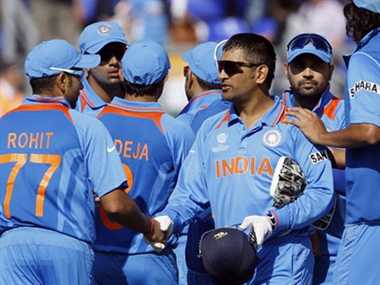
कार्डिफ। आइसीसी चैंपियंस ट्रॉफी के वार्म-अप मुकाबले में दिनेश कार्तिक की शानदार नाबाद शतकीय पारी और उमेश यादव की घातक गेंदबाजी की बदौलत टीम इंडिया ने ऑस्ट्रेलिया को 243 रनों से रौंद दिया। पहले दिनेश कार्तिक (नाबाद 146) और कप्तान महेंद्र सिंह धौनी (91) की जबरदस्त पारी और फिर उमेश यादव (5 विकेट) की कहर बरपाती गेंदों के सामने ऑस्ट्रेलियाई खिलाड़ी टिक नहीं सके और 23.3 ओवरों में ही महज 65 रन बनाकर ढेर हो गए।
भारत द्वारा दिए गए 309 रनों के लक्ष्य का पीछा करने उतरी ऑस्ट्रेलियाई टीम की पारी भारतीय गेंदबाजी के सामने पूरी तरह से लड़खड़ा गई। पहले मैथ्यू वेड 5 रन बनाकर आउट हुए, फिर डेविड वार्नर बिना खाता खोले पवेलियन लौट गए। इसके बाद माइकल क्लार्क की जगह कप्तानी कर रहे जॉर्ज बेली महज 1 रन बनाकर आउट हो गए। फिर फिलिप ह्यूग्स 14 रन, मिशेल मार्श शून्य, शेन वॉटसन 4 रन, जेम्स फॉकनर 7 रन, मिशेल जॉनसन 2 रन, मिशेल स्टार्क शून्य और एडम वोग्स 23 रन बनाकर आउट हो गए।
उमेश यादव ने 5 ओवर में 18 रन देकर 5 विकेट लिए, जबकि इशांत शर्मा को 3 विकेट और आर. अश्विन को 1 विकेट मिला। ऑस्ट्रेलियाई टीम का जब एकबार विकेट गिरना शुरू हुआ, तो वह रुकने का नाम नहीं लिया। भारतीय गेंदबाजों का कहर इस कदर बरपा कि कंगारू टीम 25 ओवर भी नहीं खेल सकी।
इससे पहले टीम इंडिया ने टॉस जीतकर पहले बल्लेबाजी करते हुए दिनेश कार्तिक (डीके) के शानदार नाबाद शतक और कप्तान महेंद्र सिंह धौनी की शानदार अर्धशतकीय पारी की बदौलत निर्धारित 50 ओवरों में 6 विकेट के नुकसान पर 308 रन बनाए।
दिनेश कार्तिक ने 140 गेंदों में 17 चौके और एक छक्के की मदद से नाबाद 146 रन बनाए, जबकि धौनी ने 77 गेंदों में 6 चौके और 4 छक्कों की मदद से शानदार 91 रन बनाए। इससे पहले भारत की शुरुआत भी बेहद निराशाजनक रही और उसके शुरुआती पांच बल्लेबाज सिर्फ 55 रन पर ही पवेलियन लौट गए। इसके बाद कार्तिक और धौनी ने सूझबूझ के साथ खेलते हुए शतकीय साझेदारी निभाई और टीम इंडिया को मुश्किलों से बाहर निकाला।
टीम इंडिया के ओपनर मुरली विजय ने 1 रन और शिखर धवन ने 17 रन बनाए। इसके अलावा विराट कोहली ने 9 रन, रोहित शर्मा ने 10 रन और रवींद्र जडेजा ने नाबाद 14 रन बनाए। सुरेश रैना अपना खाता भी नहीं खोल सके। ऑस्ट्रेलिया की तरफ से मिशेल मार्श और मैक्के को 2-2 विकेट मिले, जबकि मिशेल जॉनसन और जेम्स फॉकनर को 1-1 विकेट मिला।
गौरतलब है कि टीम इंडिया ने पहले वार्म-अप मुकाबले में भी श्रीलंका को 5 विकेट से हराया था। 6 जून को चैंपियंस ट्रॉफी की शुरुआत हो रही है और पहला मुकाबला भारत-दक्षिण अफ्रीका के बीच खेला जाएगा। ऐसे में अभ्यास मुकाबलों में मिली जीत टीम इंडिया के लिए मददगार साबित हो सकती है।
Sabhar (Courtesy - Dainik Jagran etc.)
Tuesday, 4 June 2013
Lesson 6a
LESSON 6: EXERCISE LESSON

Lesson Text 2:14-47 (Acts).
6.1 Repeat each sentence.
Lesson Text 2:14-47 (Acts).
6.1 Repeat each sentence.
Then Peter stood up with the other eleven apostles (Then Peter stood up with the other eleven apostles) / and in a loud voice began to speak to the crowd. (and in a loud voice began to speak to the crowd.) / Listen to me and let me tell you what this means. (Listen to me and let me tell you what this means.) / These people are not drunk, as you suppose; (These people are not drunk, as you suppose;) / it is only nine o’clock in the morning. (it is only nine o’clock in the morning.) / These people are not drunk, as you suppose; it is only nine o’clock in the morning. (These people are not drunk, as you suppose; it is only nine o’clock in the morning.)
Jesus of Nazareth was a man (Jesus of Nazareth was a man) / whose divine authority was clearly proven to you (whose divine authority was clearly proven to you) / Jesus of Nazareth was a man whose divine authority was clearly proven to you (Jesus of Nazareth was a man whose divine authority was clearly proven to you) / by all the miracles and wonders (by all the miracles and wonders) / which God performed through him. (which God performed through him.) / by all the miracles and wonders which God performed through him. (by all the miracles and wonders which God performed through him.)
You yourselves know this, (You yourselves know this,) / for it happened here among you. (for it happened here among you.) / In accordance with his own plan (In accordance with his own plan) / God had already decided (God had already decided) / that Jesus would be handed over to you; (that Jesus would be handed over to you;) / In accordance with his own plan God had already decided that Jesus would be handed over to you; (In accordance with his own plan God had already decided that Jesus would be handed over to you;) / and you killed him by letting sinful men crucify him. (and you killed him by letting sinful men crucify him.)
But God raised him from death, (but God raised him from death,) / setting him free from its power, (setting him free from its power,) / because it was impossible that death should hold him prisoner. (because it was impossible that death should hold him prisoner.) / But God raised him from death, setting him free from its power, because it was impossible that death should hold him prisoner. (But God raised him from death, setting him free from its power, because it was impossible that death should hold him prisoner.)
yourselves
एक नजर : कुछ यूं है आइसीसी चैम्पियंस ट्रॉफी का पूरा फार्मेट

नई दिल्ली। 6 जून को भारत और दक्षिण अफ्रीका के बीच मुकाबले के साथ आइसीसी चैंपियंस ट्रॉफी 2013 की शुरुआत हो जाएगी। 8 टीमों वाले इस एकदिवसीय टूर्नामेंट में दो ग्रुप हैं : ग्रुप ए और ग्रुप बी। ग्रुप ए में ऑस्ट्रेलिया, श्रीलंका, इंग्लैंड और न्यूजीलैंड हैं, जबकि ग्रुप बी में भारत, दक्षिण अफ्रीका, वेस्टइंडीज और पाकिस्तान हैं।
प्रत्येक टीम अपने ग्रुप के शेष टीमों से एक-एक मैच खेलेगी। जीत दर्ज करने वाली टीम को 2 अंक मिलेंगे, जबकि हारने वाली टीम को कोई अंक नहीं मिलेगा। वहीं, मैच टाई रहने या परिणाम नहीं निकलने पर दोनों टीमों को एक-एक अंक दिए जाएंगे। दोनों ग्रुपों की शीर्ष दो-दो टीमें सेमीफाइनल में प्रवेश करेंगी।
यदि सेमीफाइनल मैच टाई रहता है तो मुकाबला दिलचस्प होगा, क्योंकि फैसला सुपर ओवर के आधार पर किया जाएगा। सेमीफाइनल मैच में जीत दर्ज करने वाली टीम फाइनल में प्रवेश करेगी। फाइनल मैच भी अगर टाई हो जाता है तो मैच का परिणाम सुपरओवर के जरिए निकाला जाएगा। अगर किसी भी कारण से फाइनल मैच का परिणाम नहीं निकल पाता है तो दोनों टीमों को संयुक्त विजेता घोषित कर दिया जाएगा।
चैम्पियंस ट्रॉफी के इतिहास में ऐसा एक बार हो चुका है। 2002-03 में बारिश के कारण भारत और श्रीलंका के बीच खेले गए मैच का परिणाम नहीं निकल सका था और दोनों देशों को संयुक्त विजेता घोषित किया गया था। बता दें कि टीम इंडिया का मुकाबला छह जून को दक्षिण अफ्रीका से, 11 जून को वेस्टइंडीज से और 15 जून को पाकिस्तान से होगा। पहला सेमीफाइनल मैच 19 जून को, जबकि दूसरा सेमीफाइनल मुकाबला 20 जून को होगा। चैम्पियंस ट्रॉफी का फाइनल मुकाबला 23 जून को एजबेस्टन में होगा।
Sabhar (Courtesy - Dainik Jagran etc.)
Subscribe to:
Posts (Atom)